Interview with Author Jonathan Daniel Gardner
- Fawn
- Jun 2
- 5 min read

Jonathan Daniel Gardner's literary, dialogue-forward piece "I Don't Know Anyone Here" stuck with the editorial team when we encountered it, its negative spaces holding a surprising impact as it prickles at the edges of internal explorations we don't always see in stories: the distinct tension between public presentation and authenticity; of self-knowledge and emotional evasion. Read on to hear our chat with the author below.
What makes you keep writing, even when it's hard?
Honestly, I don’t write when it’s hard. When it’s working, it’s obsessive. When it isn’t, no amount of discipline will make it happen.
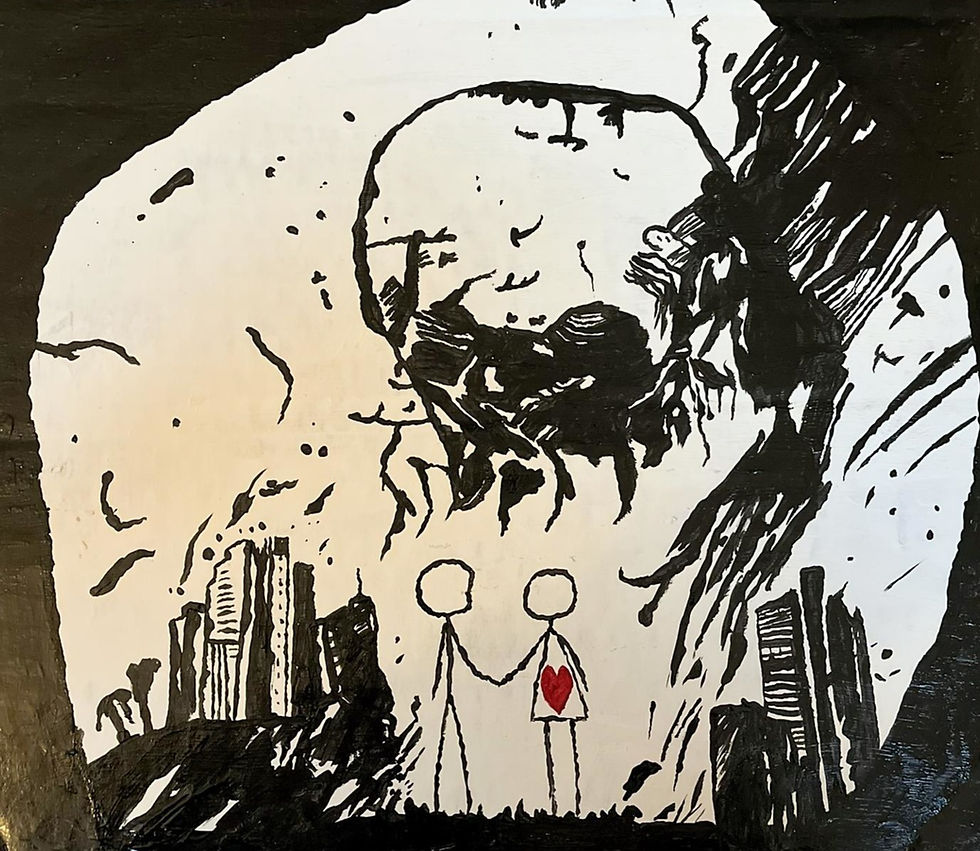
What I’ve learned is to stay available instead of forcing it. I keep notes, collect lines, pay attention to people. I do other creative work that keeps my attention sharp. I play guitar, cook something complicated without a recipe, or paint terrible stick figure paintings. Writing is the only one I expect anything from, so when it returns, I follow it until it runs out.
Advice on creating that you’ve learned by trial and error.
I don’t think process is transferable. I tried to copy other writers’ routines for years and mostly just felt guilty about failing at them. Eventually I realized my aspirations to be disciplined didn’t matter much. What mattered was whether pages existed. So the lesson was to stop trying to look like a responsible writer and focus on whatever method actually produces pages.
What's your favorite underappreciated novel or short story (a work you never hear anyone else talking about)?
A Cool Million by Nathanael West. It’s one of the funniest and most vicious books I’ve ever read. I’m sure other people like it. I’ve never met them.
Do you have a favorite book on writing or creating that's been a helpful resource?
A book that stuck with me was Stand Still Like the Hummingbird by Henry Miller. I read it when I was about twenty-one, working a terrible 8-5 job in document control for Flowserve. My personal protest against the place was refusing to eat in the break room. I would sit in my car in the parking lot eating a pickle and mustard sandwich in the middle of a Virginia summer while reading Miller essays about art and the artist. A lot of those essays shaped how I think about creativity. He had a way of describing the artist as someone who stays available for the work instead of trying to force it. Unfortunately, some of his condescension rubbed off on me too, and I’ve spent a lot of years trying to unlearn that part.
If you were a cryptid, what would your name be and what would you eat?
Jonfin. I’d eat Rio Red grapefruits and avoid eye contact.
What other lit journals are you into right now (and what do you like about them)?
Stanchion is run by Jeff Bogle, who appears to do absolutely everything for the magazine himself. Editing, publishing, promoting the work, keeping the whole thing moving forward. It’s the kind of effort that makes you realize how much of the literary world runs on one person deciding to care about it every day. He also has great taste in music, which is absolutely connected to the editorial sensibility.
I also really like Rawhead. They seem to take the time to really understand what writers are trying to do with a piece, and that shows in what they publish. You get a real range of voices and styles in their issues, and they’re genuinely committed to giving space to writers who might not always get it. That kind of editorial attention goes a long way.
Planes, trains, boats, or automobiles?
Trains. They move at a speed that allows you to think about your life but not fix anything.
One sentence soapbox:
Leather pants are only for aging rock stars and fetishists.
What is your writing strategy? Do you write every day with a rigid schedule, or are you more flexible with your practice?
When something is working I’ll write for forty-eight hours straight, sleep ten or twelve, and then do it again. That can go on for a month, sometimes three. Eventually a draft appears and I’m no longer medically interesting.
When did you realize you were weird?
Probably when I learned other people relax without first researching it.
Do you think about your reader?
Kind of. I think good writing should be intentional and readable while still sounding like the person who wrote it. If I’m going to ask someone to spend time with something I wrote down, I don’t want to waste that time. Beyond that, I mostly just try to be honest on the page. Readers are very good at detecting that.
Are you good at taking tests?
Not really. I left school after fifth grade and got a GED at fifteen, so my formal test-taking career ended early.
Tell us a secret.
I’ve only ever smoked cigarettes for the aesthetic.
What was the best money you spent on something writing-related?
A Victorian fainting couch. I’ve written every single thing I’ve ever written on it. It turns out languishing is my most productive posture.
What is your favorite museum or gallery?
The Guggenheim. The spiral lets the exhibition reveal itself gradually instead of all at once. It makes sequencing the pieces important.
Most triumphant thing you did as a teenager?
Stayed in my room and learned to play guitar just well enough to be slightly better than you expect when you find out I play guitar.
What is weird?
Curiosity past the socially acceptable comfort level.
What was the inspiration for your story?
My narrator is socially fluent but emotionally evasive. I wanted to write about the kind of existential pressure that produces that trait. Also, I had the idea for that party and it just seemed fun.
What do you hope readers experience from your work?
Solidarity in the general struggle of trying to be a person.
How do you combat loneliness?
I find friends who understand me and maintain those friendships ardently.
Thoughts about artichokes?
A triumph of patience.
What’s the point of all this, really?
To keep the dread occupied.
Unpopular opinion, go:
Natural wine is disgusting and people are pretending.
As you probably know, we’re working hard on building a weird community that supports creatives (like you!) and promotes nontraditional writing and art. Let us know if there’s anything in particular that you would like to see here: workshops, groups, book clubs, multimedia interviews, AMAs, etc.
An exquisite corpse! It produces the kind of strange work writers normally spend years claiming they planned.
Jonathan Daniel Gardner is a writer from the American South. He currently lives and writes in Brooklyn, New York, where he has developed a complicated relationship with errands and a rich inner life about public transportation. His work has appeared or is forthcoming in The Brooklyn Rail, Identity Theory, Maudlin House, and elsewhere. He holds a degree in Creative Writing from The New School and is currently completing his first novel, In Moon I Keep You. Find him on Instagram: @jonathandanielgardner